<?xml version="1.0" encoding="utf-8"?><feed xmlns="http://www.w3.org/2005/Atom" ><generator uri="https://jekyllrb.com/" version="3.10.0">Jekyll</generator><link href="https://rustab.github.io/feed.xml" rel="self" type="application/atom+xml" /><link href="https://rustab.github.io/" rel="alternate" type="text/html" /><updated>2026-11-12T13:30:00+00:00</updated><id>https://rustab.github.io/feed.xml</id><title type="html">Rustab’s blog</title><subtitle>A list of technical, non-technical articles, and such.</subtitle><entry><title type="html">組合せ数学</title><link href="https://rustab.github.io/%E6%95%B0%E5%AD%A6/2026/10/31/%E7%B5%84%E5%90%88%E3%81%9B%E6%95%B0%E5%AD%A6.html" rel="alternate" type="text/html" title="組合せ数学" /><published>2026-10-31T00:00:00+00:00</published><updated>2026-10-31T00:00:00+00:00</updated><id>https://rustab.github.io/%E6%95%B0%E5%AD%A6/2026/10/31/%E7%B5%84%E5%90%88%E3%81%9B%E6%95%B0%E5%AD%A6</id><content type="html" xml:base="https://rustab.github.io/%E6%95%B0%E5%AD%A6/2026/10/31/%E7%B5%84%E5%90%88%E3%81%9B%E6%95%B0%E5%AD%A6.html"><![CDATA[<h1 id="方式">方式</h1>

\[\begin{equation}
\binom{n}{k} = \frac{n!}{k!(n-k)!}
\end{equation}\]

<h2 id="references">References</h2>

<ul>
  <li><a href="https://qiita.com/BurnEtz/items/e79999264125eb128ae7">Qiita</a></li>
  <li><a href="https://docs.mathjax.org/en/latest/web/start.html#using-mathjax-from-a-content-delivery-network-cdn">Mathjax CDN</a></li>
  <li><a href="https://docs.mathjax.org/en/v4.1/input/tex/eqnumbers.html">Mathjax Equation Numbering</a></li>
</ul>]]></content><author><name></name></author><category term="数学" /><summary type="html"><![CDATA[方式]]></summary></entry><entry><title type="html">Making a hanger</title><link href="https://rustab.github.io/diy/2026/08/23/door-hanger.html" rel="alternate" type="text/html" title="Making a hanger" /><published>2026-08-23T00:00:00+00:00</published><updated>2026-08-23T00:00:00+00:00</updated><id>https://rustab.github.io/diy/2026/08/23/door-hanger</id><content type="html" xml:base="https://rustab.github.io/diy/2026/08/23/door-hanger.html"><![CDATA[<h1 id="making-a-wooden-door-hanger">Making a wooden door hanger</h1>

<p>I had some spill wood left after creating a re-tractable shelf with my partner. I had an idea to make something of various parts that connects in japanese style woodworking. You know those where the joints connect seamlessly without screws or bolts.</p>

<p>However, I had no chisels.</p>

<p>So, I decided to use a Mora-knife to create one of those hangers that you can stabilize on the door directly.</p>

<h2 id="sketches">Sketches</h2>

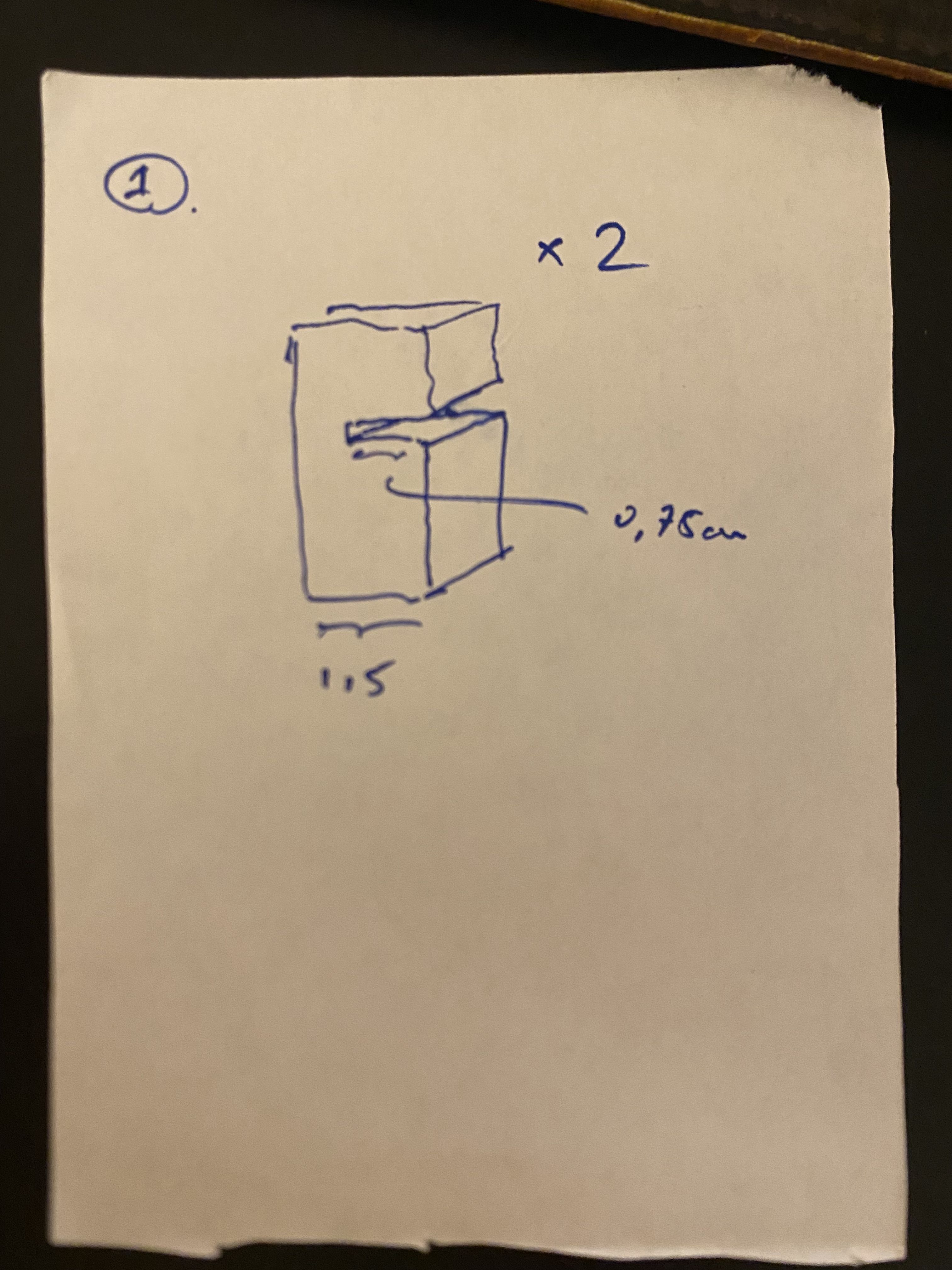
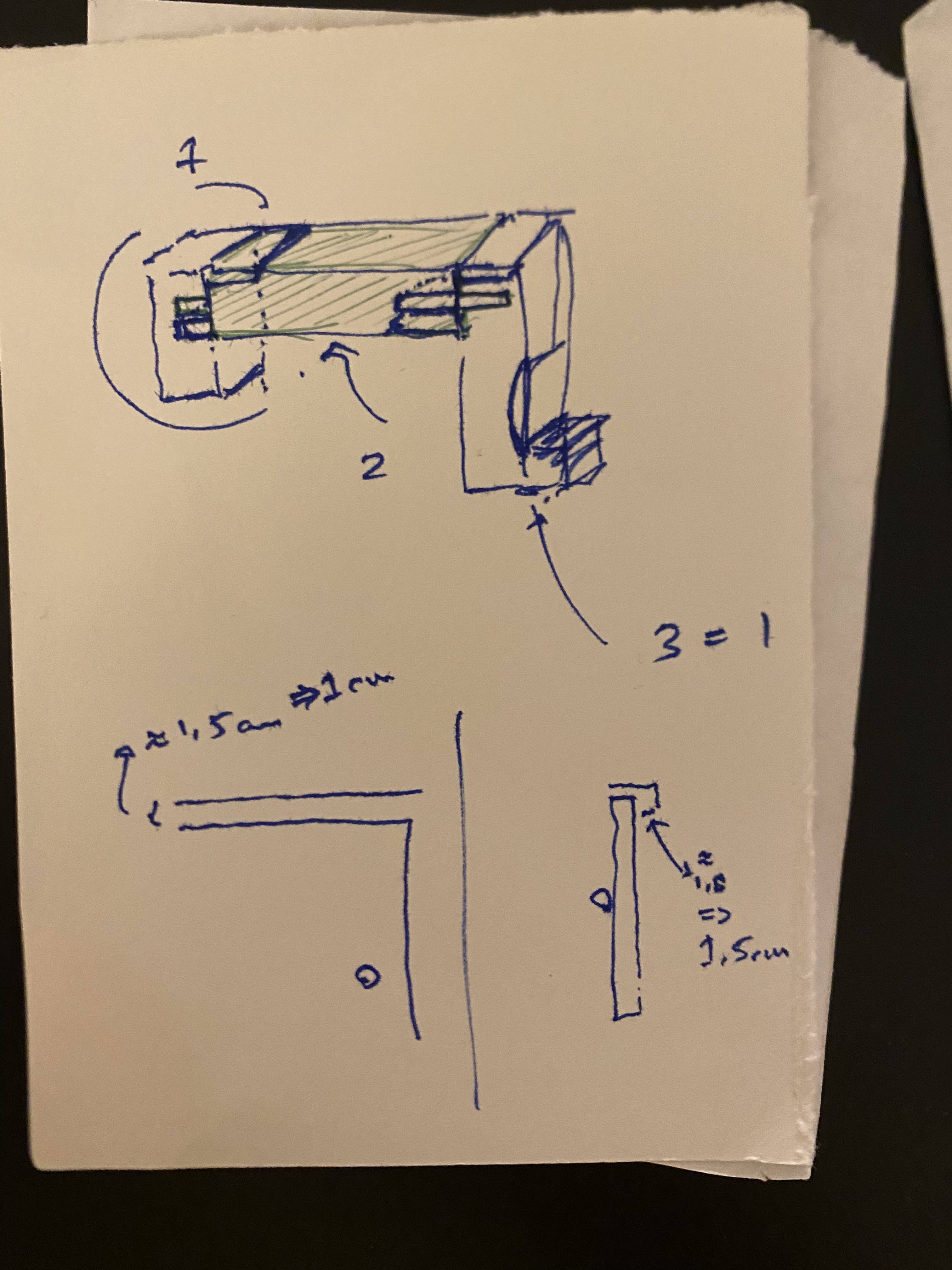
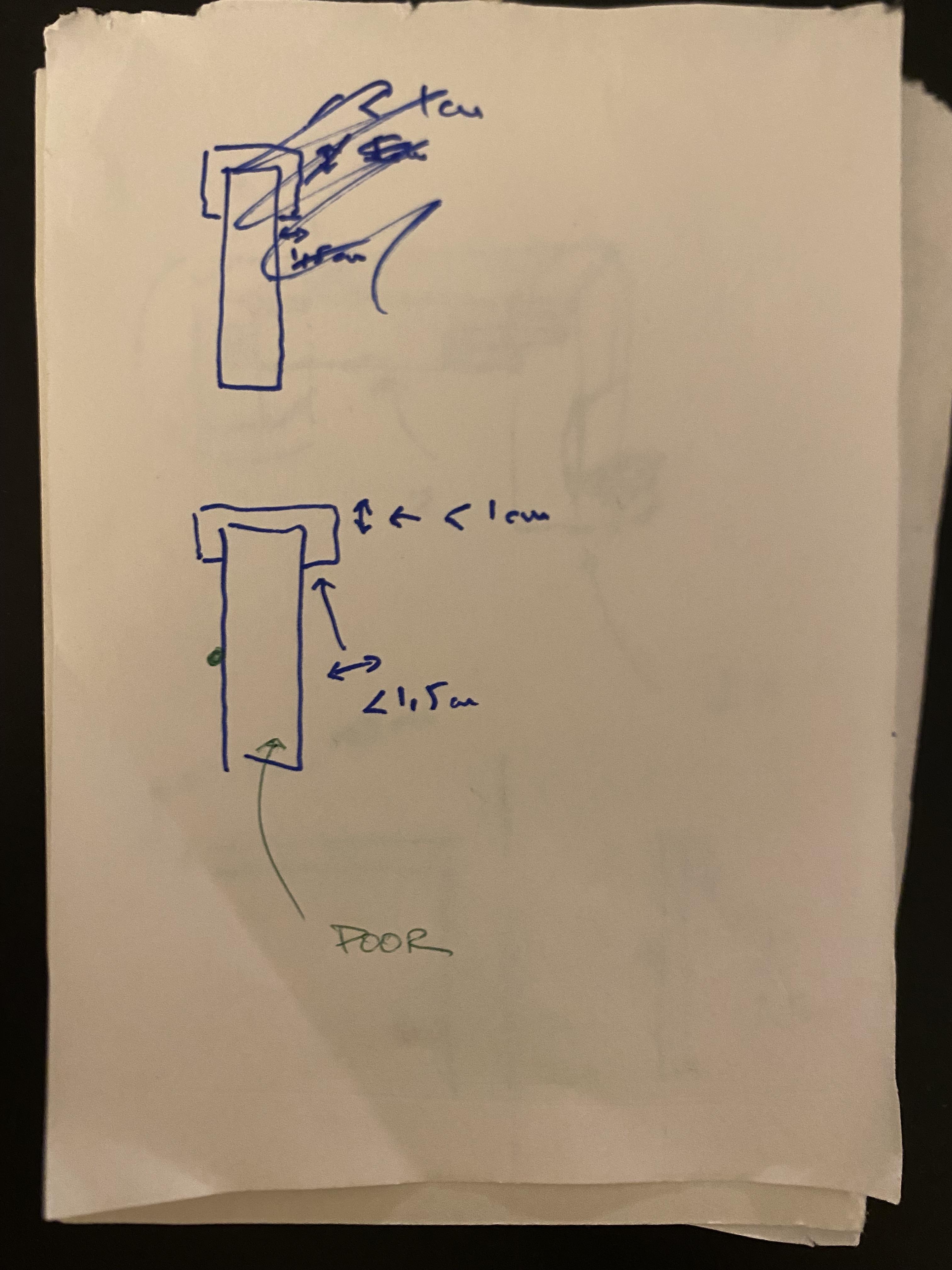
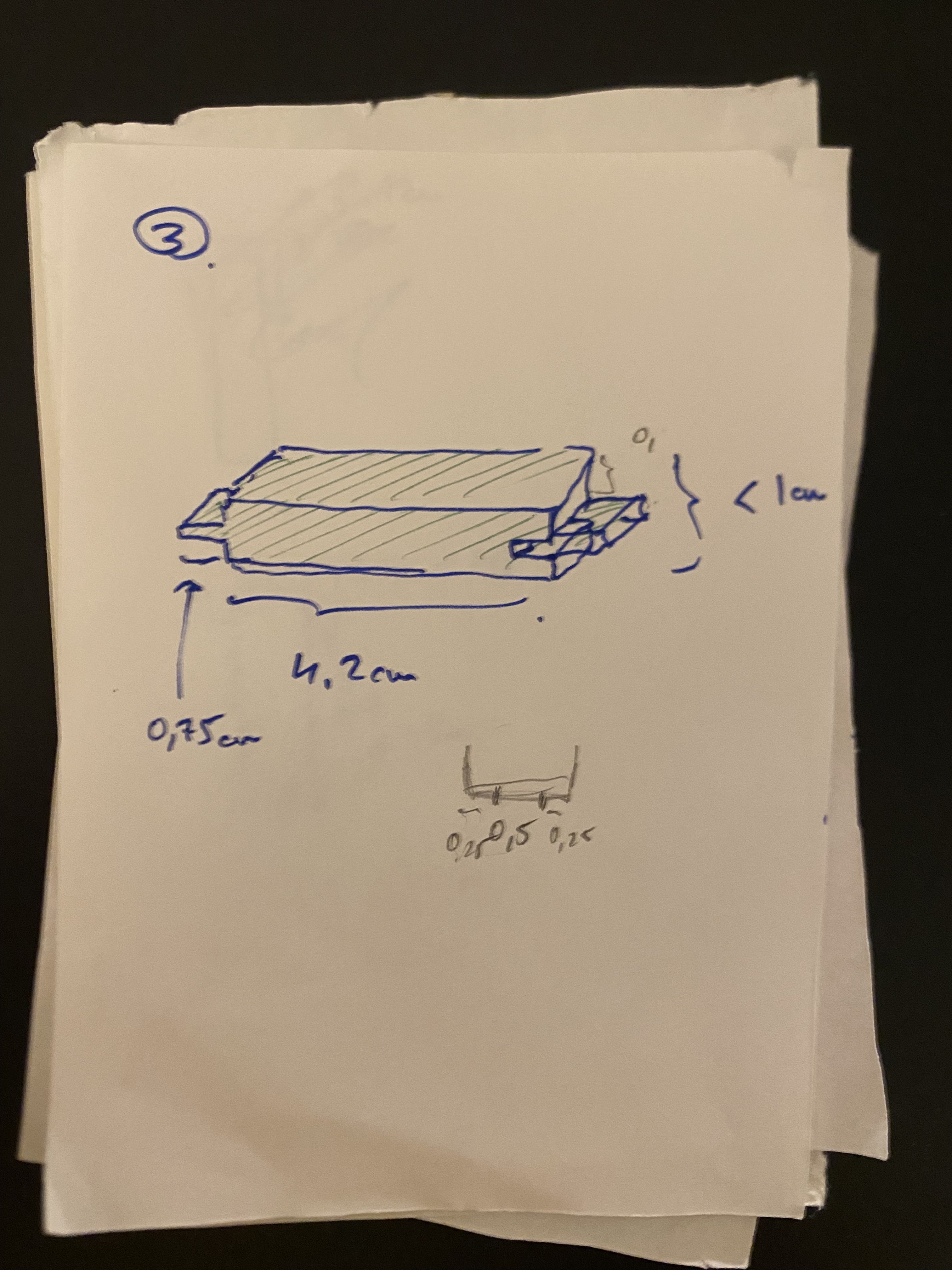
<p>Here are my unreadable doodles. I know documentation is an engineering virtue so I wanted to at least push up all of my stuff before I forget.</p>

<h3 id="doodles">Doodles</h3>

<p><img src="/images/2026-08-23/IMG_6699.jpg" alt="sketch4" /></p>

<p><img src="/images/2026-08-23/IMG_6700.jpg" alt="sketch1" /></p>

<p><img src="/images/2026-08-23/IMG_6701.jpg" alt="sketch2" /></p>

<p><img src="/images/2026-08-23/IMG_6702.jpg" alt="sketch3" /></p>

<h3 id="result">Result</h3>

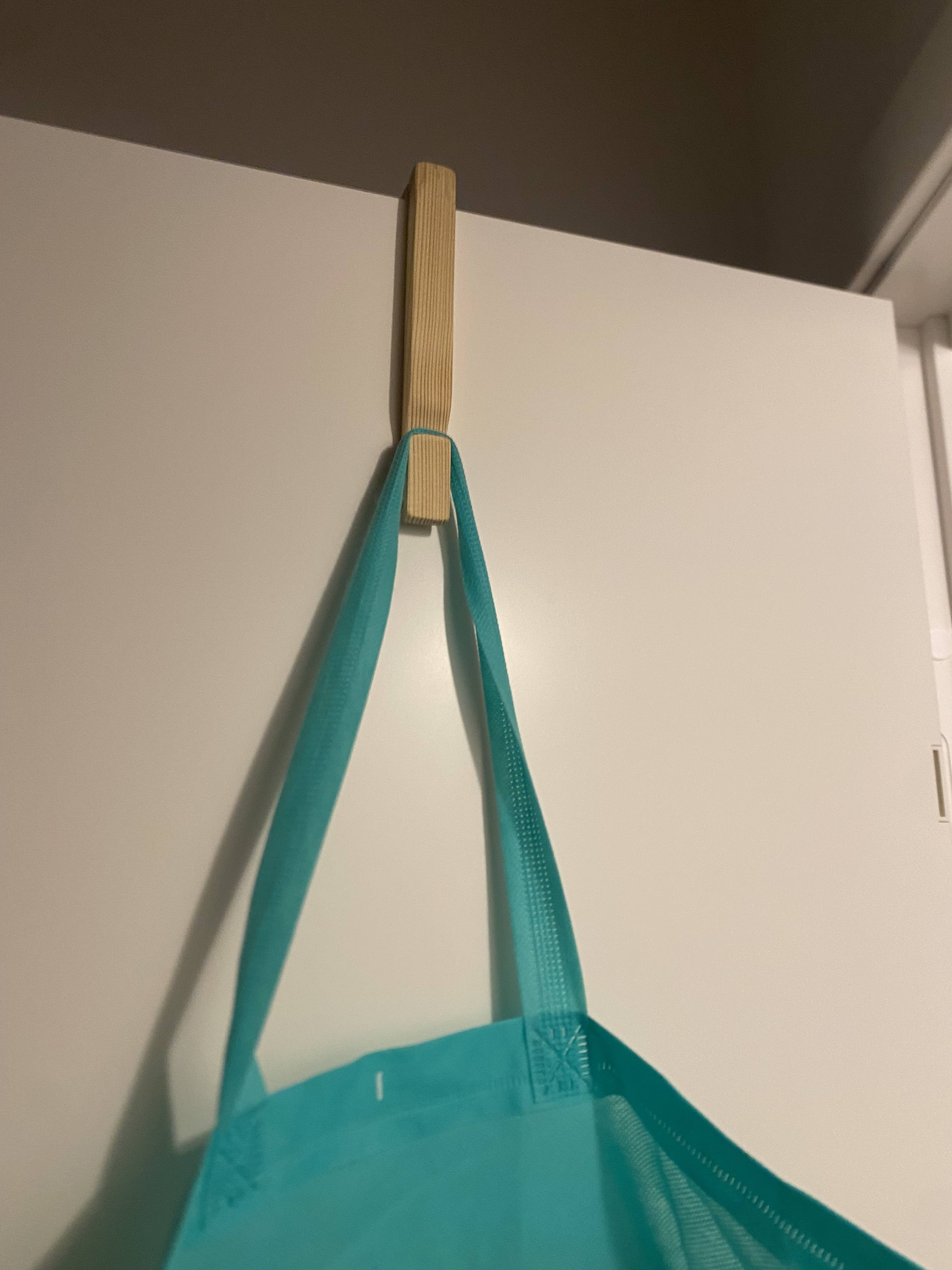
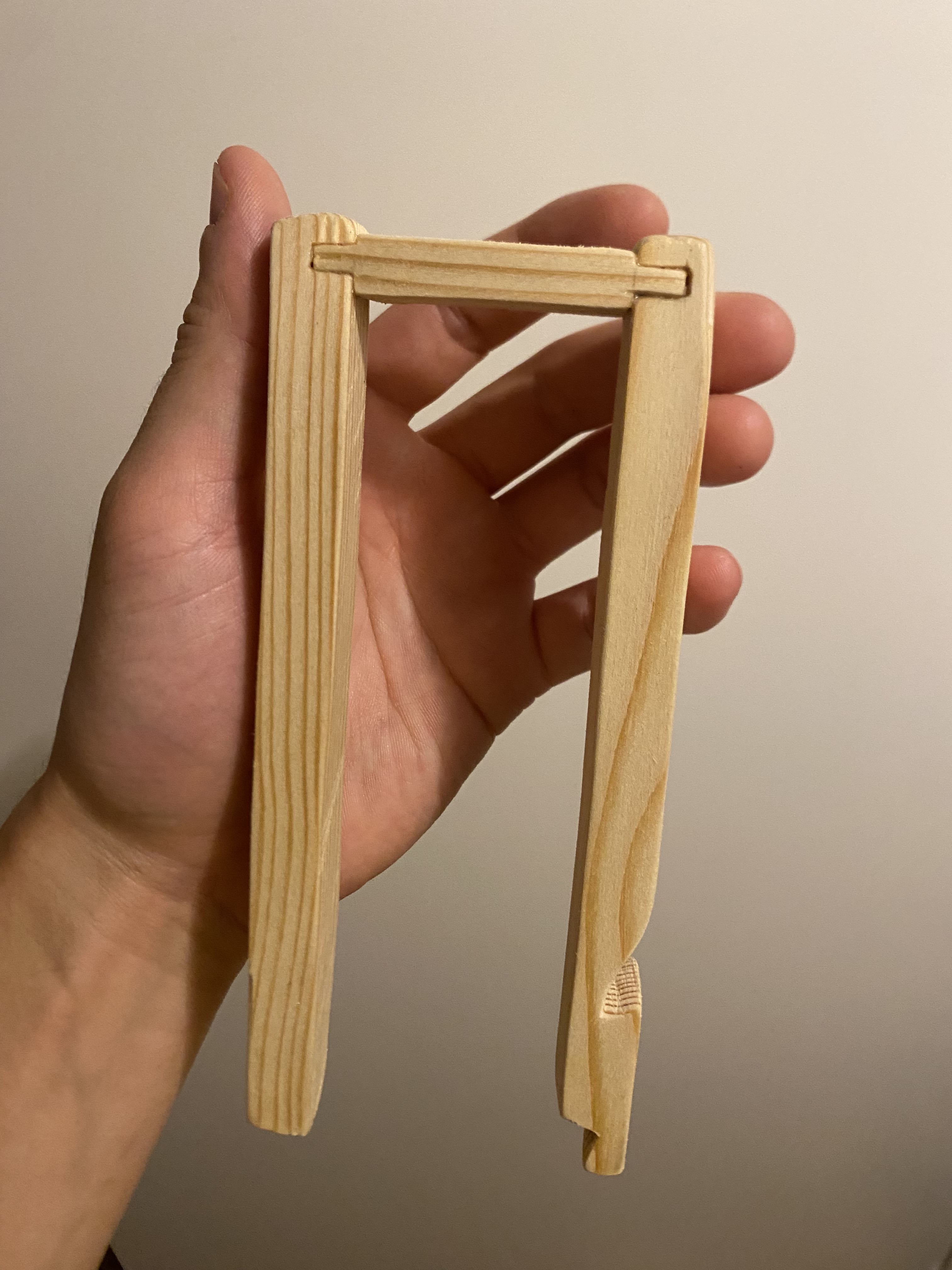
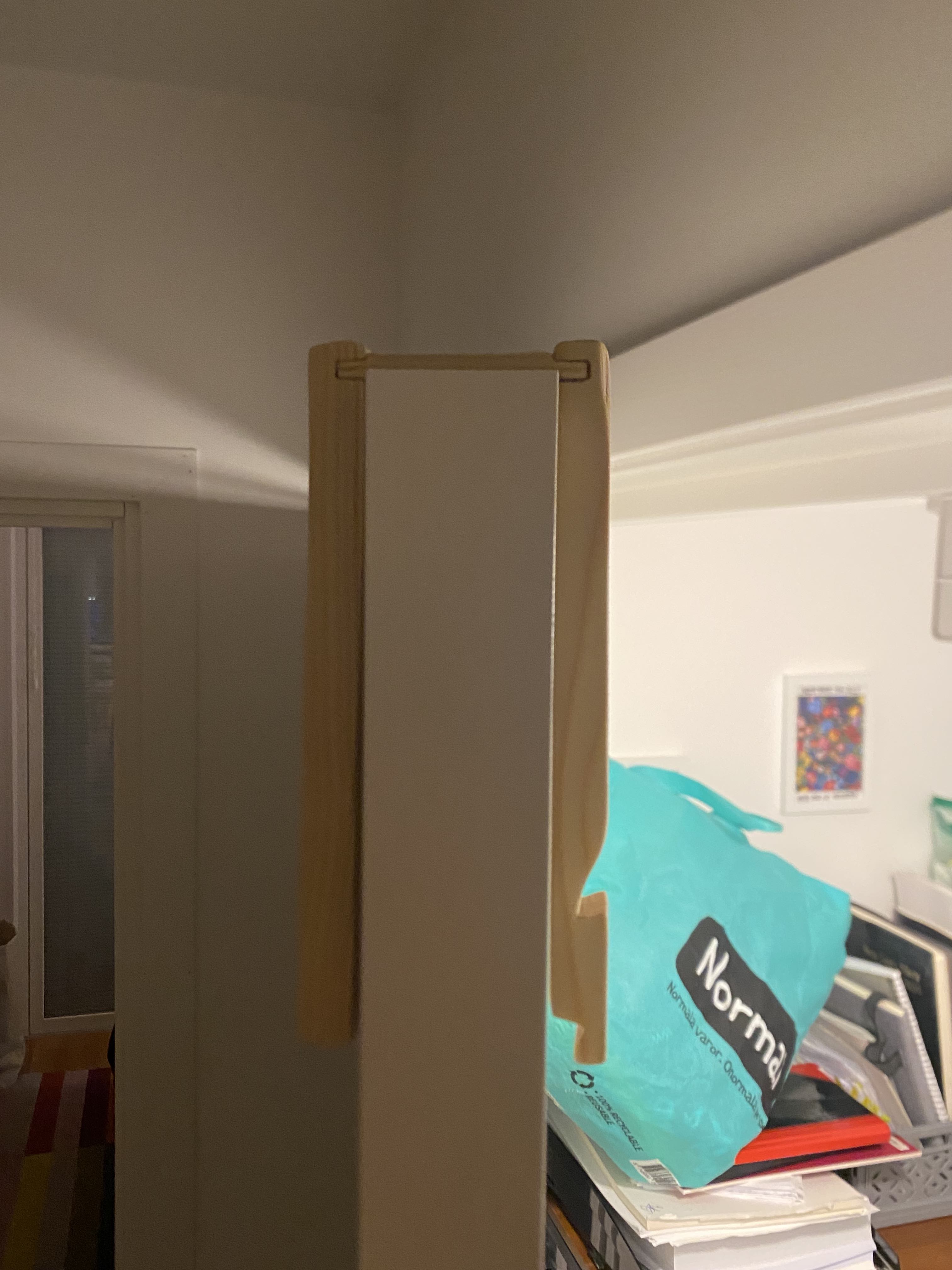
<p><img src="/images/2026-08-23/IMG_6696.jpg" alt="hanger" /></p>

<p><img src="/images/2026-08-23/IMG_6697.jpg" alt="overview" /></p>

<p><img src="/images/2026-08-23/IMG_6698.jpg" alt="hanging" /></p>

<h2 id="discussion">Discussion</h2>

<p>This project took about 3 days in total.</p>

<ul>
  <li>1st day I cut out all three pieces and the details</li>
  <li>2nd day I spent on papering. I oiled the tree at the end of the day</li>
  <li>3rd day I glued the parts together.</li>
</ul>

<p>It was a fun little project. I have no idea how much this hanger can hold without breaking, but I would guess it is about 5kg at most.</p>

<p>If I would do it again, I would buy a chisel set to get more accurate cuts.</p>]]></content><author><name></name></author><category term="diy" /><summary type="html"><![CDATA[Making a wooden door hanger]]></summary></entry><entry><title type="html">動詞の活用グループにおいて</title><link href="https://rustab.github.io/%E6%96%87%E6%B3%95/2026/02/14/%E6%97%A5%E6%9C%AC%E8%AA%9E%E3%81%AE%E5%8B%95%E8%A9%9E%E6%B4%BB%E7%94%A8.html" rel="alternate" type="text/html" title="動詞の活用グループにおいて" /><published>2026-02-14T00:00:00+00:00</published><updated>2026-02-14T00:00:00+00:00</updated><id>https://rustab.github.io/%E6%96%87%E6%B3%95/2026/02/14/%E6%97%A5%E6%9C%AC%E8%AA%9E%E3%81%AE%E5%8B%95%E8%A9%9E%E6%B4%BB%E7%94%A8</id><content type="html" xml:base="https://rustab.github.io/%E6%96%87%E6%B3%95/2026/02/14/%E6%97%A5%E6%9C%AC%E8%AA%9E%E3%81%AE%E5%8B%95%E8%A9%9E%E6%B4%BB%E7%94%A8.html"><![CDATA[<h1 id="動詞の活用グループにおいて">動詞の活用グループにおいて</h1>

<h2 id="背景">背景</h2>
<p>日本語の動詞の活用方法が今まであんまり理解していなっかたです。
正直、動詞の活用方法を彼女に説明する際頭の中は結構モヤモヤします。</p>

<p>幼い頃、お母さんは僕たち兄弟たちに厳しく日本語を教えました。補習校には通ってましたけど、記憶限り徹底的な日本語文法の教育は受けたことありません。</p>

<p>引いて、僕が会話等に実行していた動詞の活用においては、全部システムとルールを無視して学びました。</p>

<p>ゆえに、活用のルールを分かってなかったらもちろん、どんだけ日本語喋れても、彼女の文法学びには参考にはならない。</p>

<p>かてて加えて、最近は五十音図に興味を持ち出しました。なぜかというと、これが動詞活用に関係あるって聞いたからです。
関係の意味を理解せず、とりあえず五十音図の事自体を身につけました。</p>

<p>まあ、その道です。
それで、この記事では僕が見つけた日本語活用方法とその活用方法が五十音図にどう関係するかを紹介したいと思います。</p>

<h2 id="はじめに">はじめに</h2>

<p>この記事で紹介する動詞分類は３つです。</p>

<ul>
  <li>五段動詞（I型動詞、グループ１、強変化動詞）</li>
  <li>一段動詞（II型動詞、グループ２、弱変化動詞）</li>
  <li>不規則動詞（III動詞型、グループ３、カ行変格動詞、サ行変格動詞）</li>
</ul>

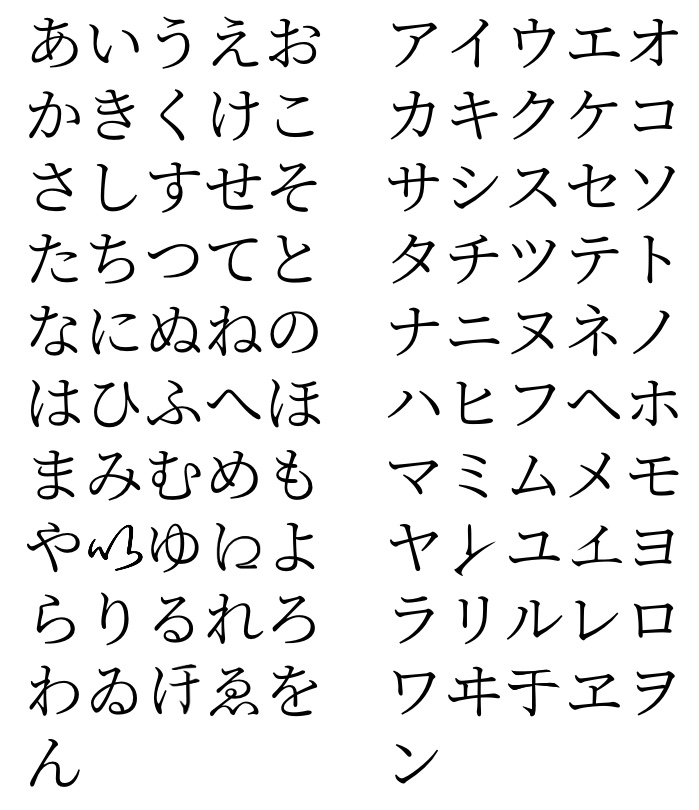
<p>見分けかたに使う道具は五十音図です。紹介します</p>

<p><img src="/images/2026-02-14/Hiragana-Katakana-Gojuuon.jpg" alt="" /></p>

<p>全ての辞書形動詞の最後の文字はウ段に当たる。</p>

<p>例えば:</p>

<table>
  <thead>
    <tr>
      <th>辞書形　</th>
      <th> 語末 </th>
    </tr>
  </thead>
  <tbody>
    <tr>
      <td>食べる</td>
      <td>る</td>
    </tr>
    <tr>
      <td>話す</td>
      <td>す</td>
    </tr>
    <tr>
      <td>泳ぐ</td>
      <td>ぐ</td>
    </tr>
  </tbody>
</table>

<h2 id="見分け方">見分け方</h2>

<p>各グループはルールあります。そのルールを使ってどの動詞が当たるかを決断します。
考え方はこんな感じでいいと思います:</p>

<blockquote>
  <p>一番厳しいルールはグループ3。それからグループ2。最後にグループ1。なお、一番厳しいルールに当てなかったら、次のルールを確認する。その過程であたるグループを探します。</p>
</blockquote>

<h3 id="グループ3ー不規則動詞">グループ3　ー　不規則動詞</h3>

<p>このグループのルールは下記です</p>

<blockquote>
  <p>　「動詞の辞書形は『来る』それても『する』」</p>
</blockquote>

<h3 id="グループ２ー一段動詞">グループ２　ー　一段動詞</h3>

<p>このグループのルールは下記です</p>

<blockquote>
  <p>「辞書形の動詞の語末が「る」」と「語末前の文字は「い段」、及び「え段」に当たる」</p>
</blockquote>

<h4 id="例">例</h4>

<table>
  <thead>
    <tr>
      <th>辞書形</th>
      <th>語末前の文字</th>
      <th>語末前の文字の段</th>
    </tr>
  </thead>
  <tbody>
    <tr>
      <td>食べる</td>
      <td>べ</td>
      <td>え</td>
    </tr>
    <tr>
      <td>植える</td>
      <td>え</td>
      <td>え</td>
    </tr>
    <tr>
      <td>痺る</td>
      <td>び</td>
      <td>い</td>
    </tr>
    <tr>
      <td>染みる</td>
      <td>み</td>
      <td>い</td>
    </tr>
  </tbody>
</table>

<h3 id="グループ１ー五段動詞">グループ１　ー　五段動詞</h3>

<p>このグループのルールは下記です</p>

<blockquote>
  <p>　ルール３とルール２に当たらない動詞はグループ１</p>
</blockquote>

<h4 id="例-1">例</h4>

<table>
  <thead>
    <tr>
      <th>辞書形</th>
    </tr>
  </thead>
  <tbody>
    <tr>
      <td>貢ぐ</td>
    </tr>
    <tr>
      <td>起こる</td>
    </tr>
    <tr>
      <td>殺す</td>
    </tr>
    <tr>
      <td>言う</td>
    </tr>
  </tbody>
</table>

<h2 id="活用">活用</h2>

<p>では、見分けかたを紹介しましたので、次に各グループの活用方法を説明したいと思います。</p>

<p>説明したい活用形は六つ</p>

<table>
  <thead>
    <tr>
      <th>形</th>
    </tr>
  </thead>
  <tbody>
    <tr>
      <td>ない形</td>
    </tr>
    <tr>
      <td>ます形</td>
    </tr>
    <tr>
      <td>辞書形</td>
    </tr>
    <tr>
      <td>ば形 （条件形）</td>
    </tr>
    <tr>
      <td>意向形（意志形／よう形）</td>
    </tr>
    <tr>
      <td>て形</td>
    </tr>
  </tbody>
</table>

<p>グループごとに活用を例と一緒に紹介します</p>

<h3 id="グループ３">グループ３</h3>

<table>
  <thead>
    <tr>
      <th>形</th>
      <th>来る</th>
      <th>する</th>
    </tr>
  </thead>
  <tbody>
    <tr>
      <td>ない形</td>
      <td>来ない</td>
      <td>しない</td>
    </tr>
    <tr>
      <td>ます形</td>
      <td>来ます</td>
      <td>します</td>
    </tr>
    <tr>
      <td>辞書形</td>
      <td>来る</td>
      <td>する</td>
    </tr>
    <tr>
      <td>ば形 （条件形）</td>
      <td>来れば</td>
      <td>すれば</td>
    </tr>
    <tr>
      <td>意向形（意志形／よう形）</td>
      <td>来よう</td>
      <td>しよう</td>
    </tr>
    <tr>
      <td>て形</td>
      <td>来て</td>
      <td>して</td>
    </tr>
  </tbody>
</table>

<p>グループ３には只二つの動詞があるので頑張って暗記してください</p>

<h3 id="グループ２">グループ２</h3>

<p>グループ２の活用は結構簡単です</p>

<p>辞書形を基づき語末の「る」省いて、活用形によって然るべく切り替えます</p>

<table>
  <thead>
    <tr>
      <th>形</th>
      <th>食べる</th>
      <th>染みる</th>
    </tr>
  </thead>
  <tbody>
    <tr>
      <td>ない形</td>
      <td>食べない</td>
      <td>染みない</td>
    </tr>
    <tr>
      <td>ます形</td>
      <td>食べます</td>
      <td>染みます</td>
    </tr>
    <tr>
      <td>辞書形</td>
      <td>食べる</td>
      <td>染みる</td>
    </tr>
    <tr>
      <td>ば形 （条件形）</td>
      <td>食べれば</td>
      <td>染みれば</td>
    </tr>
    <tr>
      <td>意向形（意志形／よう形）</td>
      <td>食べよう</td>
      <td>染みよう</td>
    </tr>
    <tr>
      <td>て形</td>
      <td>食べて</td>
      <td>染みて</td>
    </tr>
  </tbody>
</table>

<h3 id="グループ１">グループ１</h3>

<p>グループ１のルールを定義する前に二つ例を確かめましょう</p>

<table>
  <thead>
    <tr>
      <th>形</th>
      <th>言う</th>
      <th>吹く</th>
    </tr>
  </thead>
  <tbody>
    <tr>
      <td>ない形</td>
      <td>言<strong>わ</strong>ない</td>
      <td>吹<strong>か</strong>ない</td>
    </tr>
    <tr>
      <td>ます形</td>
      <td>言<strong>い</strong>ます</td>
      <td>吹<strong>き</strong>ます</td>
    </tr>
    <tr>
      <td>辞書形</td>
      <td>言<strong>う</strong></td>
      <td>吹<strong>く</strong></td>
    </tr>
    <tr>
      <td>ば形 （条件形）</td>
      <td>言<strong>え</strong>ば</td>
      <td>吹<strong>け</strong>ば</td>
    </tr>
    <tr>
      <td>意向形（意志形／よう形）</td>
      <td>言<strong>お</strong>う</td>
      <td>吹<strong>こ</strong>う</td>
    </tr>
    <tr>
      <td>て形</td>
      <td>言って</td>
      <td>吹いて</td>
    </tr>
  </tbody>
</table>

<p>では、ルールを定義しましょう。</p>

<p>辞書形の語末は五十音図の行を定める。
一例を挙げると、「吹く」の場合は語末は「く」。従って行は「カ行」。
カ行に含む文字は「か、き、く、け、こ」。</p>

<p>ア段の文字、か、は「ない形」に使う　〜＞ 辞書形の語末を「か」に置換して「ない」を添える。〜＞　吹＋か＋ない</p>

<p>イ段の文字、き、は「ます形」に使う。〜＞ 辞書形の語末を「き」に置換して「ます」を添える。〜＞　吹＋き＋ます</p>

<p>ウ段の文字、く、は「辞書形」に使う。根本</p>

<p>エ段の文字、け、は「ば形」に使う。〜＞ 辞書形の語末を「け」に置換して「ば」を添える。〜＞　吹＋け＋ば</p>

<p>オ段の文字、こ、は「意向形」に使う。〜＞ 辞書形の語末を「こ」に置換して「う」を添える。〜＞　吹＋こ＋う</p>

<p>補足：ア段の文字が「あ」の場合、採用する文字は「わ」に切り替えます。</p>

<p>上記がルールです。この「行を渡る順」が五段動詞の名前の由来です。</p>

<p>て形の活用は辞書形動詞の語末によります。以下が規則です。</p>

<ul>
  <li>語末が「う、つ、る」の場合　→ って</li>
  <li>語末が「む、ぶ、ぬ」の場合　→ んで</li>
  <li>語末が「す」の場合　→ して</li>
  <li>語末が「く」の場合　→ いて</li>
  <li>語末が「ぐ」の場合　→ いで</li>
</ul>

<p>例外：　行く　→ 行って</p>

<h1 id="参照">参照</h1>

<ul>
  <li><a href="https://chasoblogjapan.com/doushi-group/">見分け方</a></li>
  <li><a href="https://chasoblogjapan.com/doushi-katsuyo/">活用</a></li>
  <li><a href="https://www.hamasensei.com/doushinoshurui/">子音動詞は何？母音動詞は何？</a></li>
</ul>]]></content><author><name></name></author><category term="文法" /><summary type="html"><![CDATA[動詞の活用グループにおいて]]></summary></entry></feed>